If you’re wondering how do full mouth dental implants work in Whitby, the short answer is: through careful planning, precise implant placement, a healing period where bone fuses to the implants, and then a custom prosthesis that restores teeth, chewing and facial support. This guide gives a clear, step‑by‑step overview of planning, surgery, healing and the final restoration. It’s written for anyone considering full‑arch replacement, including same‑day Teeth‑in‑a‑Day® options.
What are full mouth dental implants?
Full‑arch dental implants replace an entire upper or lower set of teeth using a fixed prosthesis supported by multiple implants. Options include implant‑supported removable dentures and fixed full‑arch prostheses like All‑on‑4 or All‑on‑6. Implant‑supported dentures snap or screw onto implants for stability, while fixed prostheses are permanently attached. The goals are to restore chewing, speech, facial support and long‑term oral health while preventing bone loss.
How Do Full Mouth Dental Implants Work: Step‑by‑Step
1) Initial consultation and 3D planning
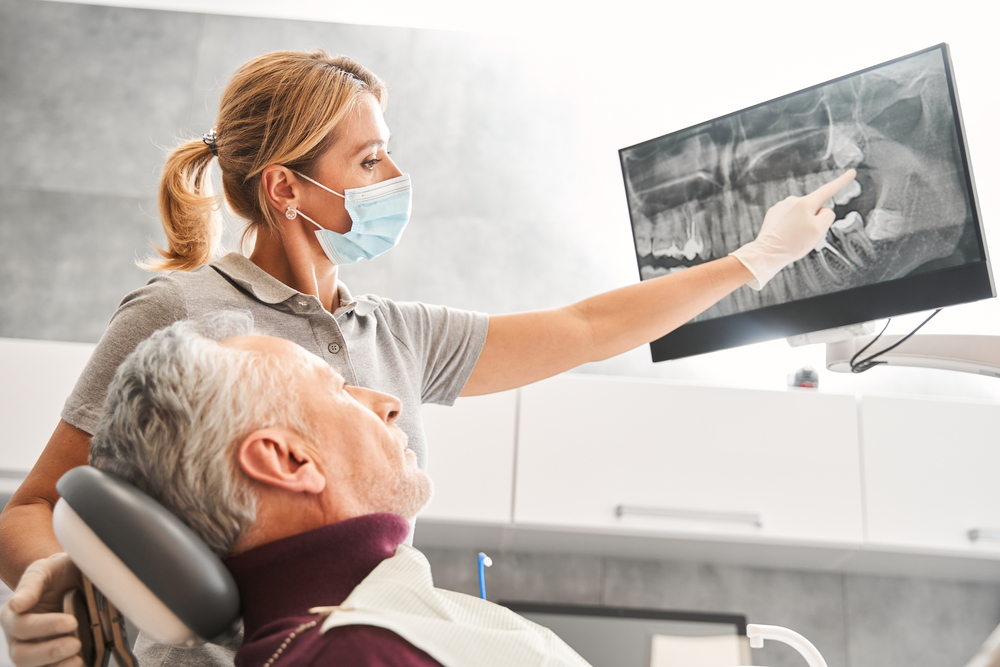
Your team will take a CBCT scan and digital impressions to map bone volume, nerve locations and bite relationships. Digital Smile Design helps visualise your final result. Planning determines ideal implant positions, prosthesis type and whether grafting or extractions are needed.
2) Surgical placement of implants
Implants are placed into the jawbone using guided surgery or dynamic navigation for precise angulation. Extractions and bone grafts are done when necessary. Sedation options range from local anaesthetic to IV sedation with an anaesthesiologist for comfort.
3) Immediate loading vs. staged approach
Immediate loading (Teeth‑in‑a‑Day®) attaches a fixed provisional prosthesis the same day as implant placement when conditions allow. A staged approach waits for osseointegration before attaching the final prosthesis. Your surgeon will recommend the safest option based on bone quality and overall health.
4) Healing and osseointegration
Over weeks to months, bone bonds to the titanium or ceramic implant surface (osseointegration). Growth factors like PRF may be used to speed healing. Regular follow‑ups monitor integration and gum health.
5) Final restoration
Once healed, digital impressions and custom planning produce the final prosthesis—milled or lab‑fabricated for strength and aesthetics. The prosthesis is secured to the implants and adjusted for comfort, function and appearance.
Who is a good candidate?
Good candidates have adequate bone or are willing to undergo grafting, are in general good health, and have realistic expectations. Non‑smokers or those who will stop smoking have better outcomes. Alternatives include partial implant treatments or improved removable dentures for patients who aren’t candidates.
Recovery, timeline and what to expect
Expect short‑term swelling, soreness and a soft‑food diet for a few days to weeks. Follow‑up visits check healing and prosthesis fit. Full function generally returns in a few months as bone integrates. Good oral hygiene and regular maintenance are essential.
Benefits and risks
Benefits include stable chewing, bone preservation, a natural appearance and improved quality of life. Risks are infection, implant failure or need for adjustments. Modern technology and careful planning reduce these risks.
Cost, insurance and financing options
Costs vary by number of implants, grafting needs and prosthesis type. Dental insurance may cover portions but often not the full cost. Many clinics offer direct billing and financing partners to spread payments.
Why consider Durham Dental Solutions for full‑arch implants
Durham Dental Solutions in Whitby is an implant‑focused centre with 30+ years’ experience, on‑site lab and advanced tech like dynamic navigation, CBCT, PRF and Teeth‑in‑a‑Day®. The team offers start‑to‑finish care with sedation options and transparent, patient‑centred planning.
Next steps: Is a full mouth implant solution right for you?
If you want to learn more about how do full mouth dental implants work in Whitby, book a consultation with CBCT assessment and digital planning. Bring any medical history, a list of medications and photos of your current smile. Contact the implant team to schedule a visit and get a personalised treatment plan.