
Many people type “what is a dental” when they want a simple answer about dental implants. A dental implant is an artificial tooth root placed into the jaw to hold a replacement tooth or bridge. This post explains what a dental implant is, how implants work, who is a good candidate, what to expect during treatment, the main benefits, risks and aftercare, and how Durham Dental Solutions in Whitby, Ontario approaches implant care.
What is a dental implant?
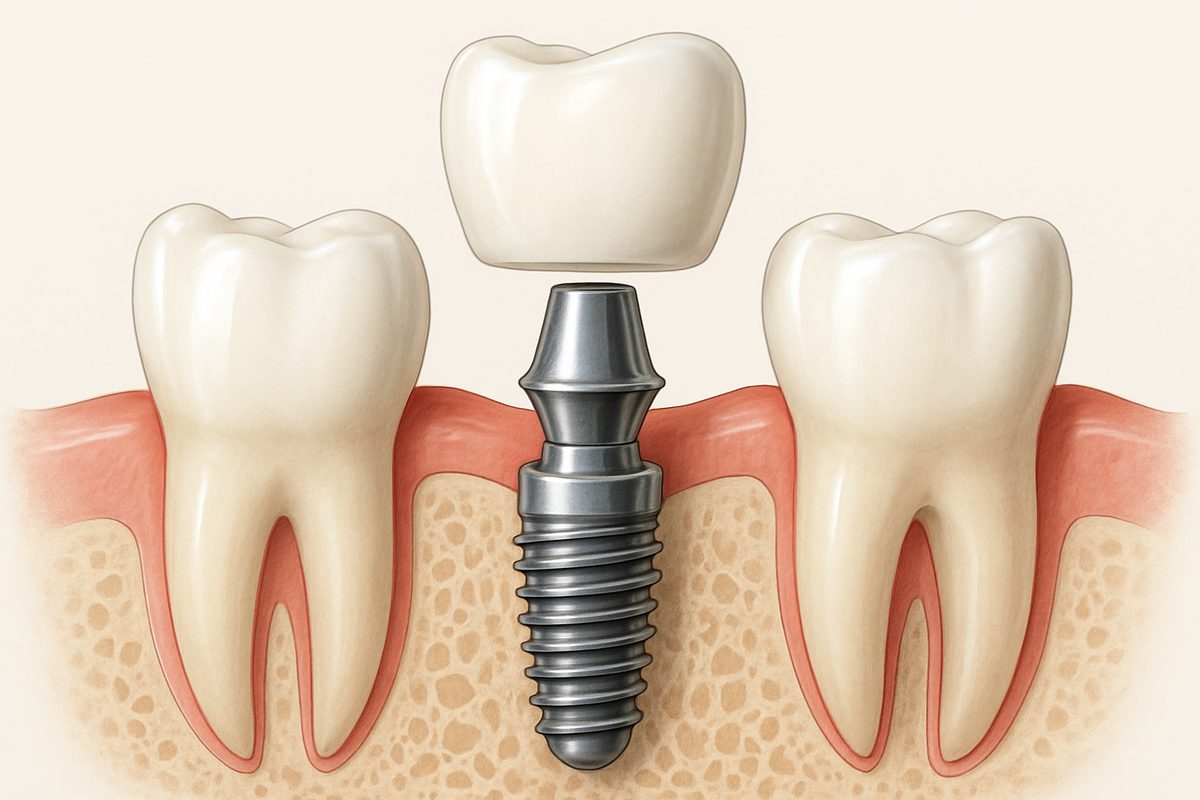
A dental implant is a small titanium or ceramic post surgically placed into the jawbone to replace a missing tooth root. Unlike bridges or dentures, implants are fixed into the bone and can support a single crown, a bridge, or a full-arch prosthesis. Implants feel and function more like natural teeth and do not rely on nearby teeth for support.
How dental implants work
Implant components
A typical implant restoration has three parts: the implant (the root), an abutment that connects the implant to the tooth, and the crown or prosthesis that looks like the tooth. For full-arch cases, a bar or fixed prosthesis attaches to multiple implants.
How they bond with bone
Implants fuse to the jaw through osseointegration — the bone grows around the implant surface. This creates a stable foundation for chewing and helps preserve bone volume that would otherwise shrink after tooth loss.
Who is a good candidate for implants?
Good candidates are generally healthy adults with adequate bone volume or those willing to have bone grafting. Candidates should have good oral hygiene and no uncontrolled medical issues like severe diabetes. People choose implants for single missing teeth, several missing teeth, or full-arch replacements when they want a long-term, natural-feeling solution.
What to expect during the implant process
Consultation and planning
Initial visits include a clinical exam, CBCT 3D imaging, and treatment planning. Digital scans and simulations help determine implant size, position, and whether bone grafting is needed.
Surgery and healing
Surgery is often done with local or IV sedation. The implant is placed into the bone, and healing takes a few months while osseointegration occurs. Most patients experience mild swelling and discomfort that improves within a week.
Same-day options
Immediate-loading protocols like Teeth-in-a-Day® let some patients leave with a fixed temporary prosthesis the same day. This depends on bone quality and case planning.
Main benefits of dental implants
Implants provide durability, better chewing function, and a natural look. They help preserve jawbone, restore speech, and boost confidence. With proper care, implants can last many years, often decades.
Risks, aftercare, and longevity
Common risks include infection, implant failure, or nerve irritation. Watch for persistent pain, swelling, or loosening and contact your dentist. Daily brushing, flossing, and regular dental visits keep implants healthy. With good care, most implants have high long-term success rates.
Why choose a specialist implant centre like Durham Dental Solutions
Durham Dental Solutions in Whitby, Ontario offers 30+ years focused on implants with experienced doctors, on-site lab work, and advanced technology (Navident, CBCT, iTero, PRF, PIEZOSURGERY, Teeth-in-a-Day®). This integrated approach improves precision, comfort, and predictable results.
Next steps — getting an implant consultation
To book a consult, bring a list of medications and any previous dental records. Durham Dental Solutions accepts direct insurance billing and offers financing through iFinance and Beautifi. Call or book online to discuss whether an implant is right for you.