
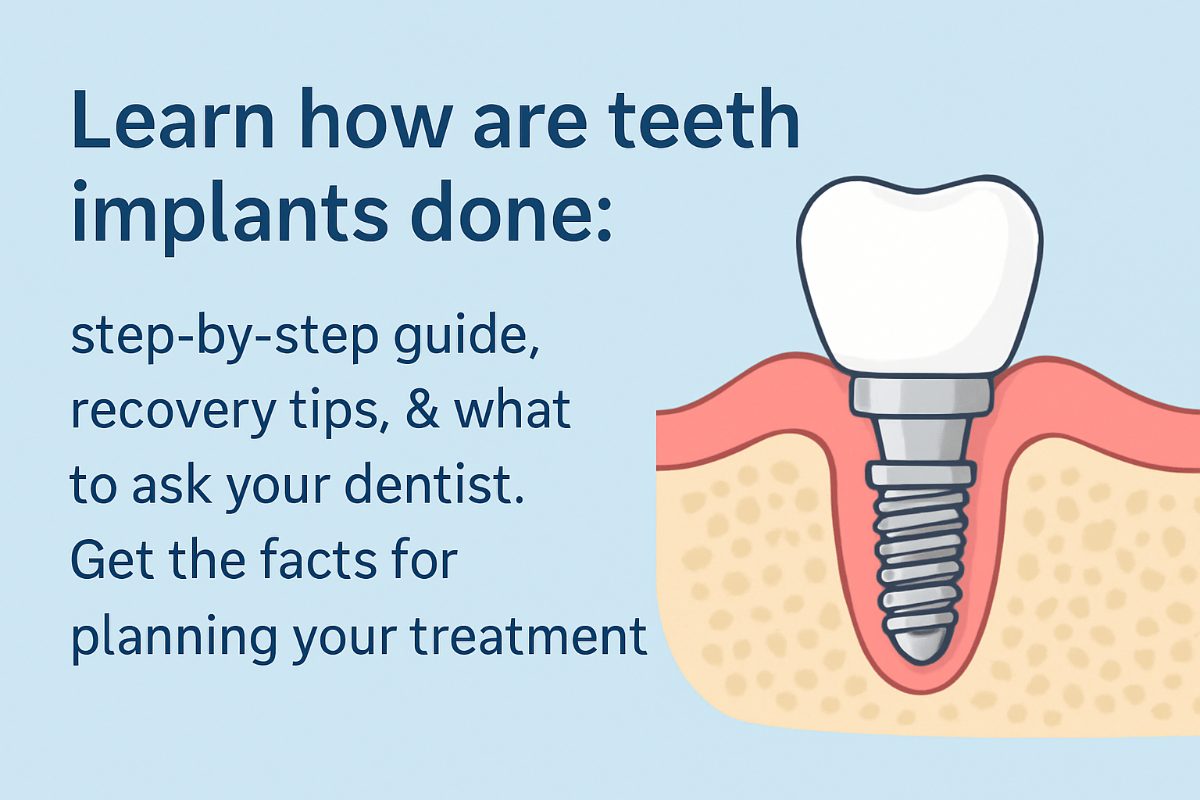
How are teeth implants done? In plain language: dental implants replace a missing tooth root with a small titanium or ceramic post, then attach a custom crown so the tooth looks and works like natural. This step‑by‑step guide explains how teeth implants are done, what to expect during recovery, the main risks, and how to choose the right provider. Read on for clear next steps you can use to plan treatment in Whitby and the Durham region.
What is a dental implant?
A dental implant is a replacement root for a missing tooth. It has three main parts:
- Implant fixture – the screw‑shaped post (usually titanium or zirconia) placed into the jawbone.
- Abutment – the connector that joins the implant to the visible tooth part.
- Crown – the lifelike tooth that sits on the abutment, made from ceramic or porcelain.
Implants act like natural roots. They support a single crown, a bridge or a full‑arch prosthesis and help preserve bone and facial structure.
Step‑by‑step: How are teeth implants done
1) Consultation and planning
First, your dentist takes a health history and performs an exam. Imaging (dental X‑rays or a CBCT scan) shows bone volume and nerve locations. The team will review options, timing and costs and plan the ideal implant position using digital tools. If you’re searching “how are teeth implants done in Whitby, Ontario,” this is where the answer begins: precise planning reduces surprises and speeds recovery.
2) Preparatory treatments (if needed)
Some patients need extra work before implant placement. That can include:
- Tooth extraction for non‑restorable teeth
- Bone grafting to build up jawbone
- Sinus lift for upper back teeth with low sinus floor
These steps affect timing—grafts can add months for healing. Your clinician will explain whether same‑day placement is possible or if staged treatment is safer.
3) Implant placement surgery
On the day of surgery you’ll receive local anaesthetic and, if chosen, sedation (nitrous, oral, or IV with an anaesthesiologist). The surgeon makes a small opening in the gum and places the implant into the bone. A healing cap or cover screw protects the site. Some implants are placed immediately after extraction; others are delayed to allow the site to heal.
4) Osseointegration (healing phase)
Osseointegration is when bone grows onto the implant surface. This usually takes 3–6 months. During this time you may have mild soreness, swelling or bruising—these are normal. Avoid heavy chewing on the site until your clinician clears you. Follow‑up visits and possibly temporary teeth keep appearance and function during healing.
5) Abutment and final restoration
Once integrated, the implant receives an abutment. Your dentist takes impressions or digital scans to design the final crown or bridge. The lab fabricates the restoration, which is fitted, adjusted for your bite and polished for a natural look. With in‑office milling or same‑day protocols, some clinics offer final restorations faster.
Recovery, risks and aftercare
Most people return to normal activities within a few days. Typical symptoms are mild pain controlled with over‑the‑counter or prescribed medication, swelling for 48–72 hours, and minor bleeding the first day.
Watch for warning signs: increasing pain after the first week, fever, heavy bleeding, or a loose implant. These could indicate infection or failed integration and need prompt care.
Aftercare tips:
- Keep the surgical site clean—gentle brushing and salt rinses as directed.
- Stick to soft foods for a few days and avoid hard or sticky items on the implant side.
- Avoid smoking and manage diabetes or other conditions that slow healing.
- Attend all follow‑up visits so your clinician can monitor healing.
Cost, timeline and choosing the right provider
Costs vary widely. Key factors include number of implants, need for grafts or sinus lifts, type of restoration (single crown, bridge, full‑arch), advanced imaging, and clinician experience. A single implant with a crown is less expensive than a full‑arch Teeth‑in‑a‑Day® solution, which uses more materials and chair time.
Typical timeline from first consult to final crown ranges from a few months (when bone and soft tissues are healthy) to 6–12+ months when grafting is required. Same‑day options can shorten visible downtime for eligible patients.
Questions to ask a dentist or surgeon:
- How many implants do you place each year and what are your success rates?
- Will you use CBCT imaging and guided surgery?
- What sedation options do you offer and who administers them?
- Do you provide warranties, and what are typical costs and financing choices?
For answers to “how are teeth implants done in Whitby, Ontario,” ask about specific technologies and timelines the clinic uses, not just general descriptions.
Looking for a dental implant expert?
Durham Dental Solutions is a full‑scope implant centre in Whitby with over 30 years’ focused experience. Led by Dr. Mark Bishara and Dr. Sheri Margolian, the clinic uses CBCT, dynamic Navident guidance, iTero scanning, PRF and in‑office milling to offer predictable, minimally invasive care and same‑day options like Teeth‑in‑a‑Day®. They follow the Ontario Dental Association fee guide, offer direct insurance billing and flexible financing, and provide in‑office sedation, including IV with a certified anaesthesiologist. To book a consultation or get a second opinion about implants in Whitby, Ontario, contact their team for a review of your individual plan.